Discover practical daily habits for fitness and healthy aging. Learn science-backed ways to stay active, improve mobility, and maintain independence as you age.
Introduction
Getting older does not mean giving up on fitness, strength, or independence. That is not just a motivational idea. It is backed by decades of research from institutions like the National Institute on Aging and the Centers for Disease Control and Prevention.
Most people notice real changes as the years go on. Energy dips. Recovery takes longer. Climbing a flight of stairs feels harder than it used to. These changes are normal, but staying inactive speeds them up dramatically.
The good news is that fitness and healthy aging do not require brutal workout programs or expensive gym memberships. They require consistency. Small daily habits, repeated over weeks and months, produce the kind of strength, balance, and stamina that keep you independent and active well into your 70s, 80s, and beyond.
This guide covers the core habits that actually work, how to build them into your existing routine, common mistakes that derail progress, real-world examples, and answers to the questions most older adults have but rarely ask. By the end, you will have a clear, practical starting point regardless of your current fitness level.
Understanding Fitness and Healthy Aging
Fitness and healthy aging are not about turning back the clock. They are about slowing certain declines, maintaining function, and protecting your quality of life for as long as possible.
After age 30, adults naturally lose 3 to 5 percent of muscle mass per decade. This process, called sarcopenia, accelerates after 60 if you do not actively work against it. Bone density drops. Joint flexibility decreases. Balance becomes less reliable. These are biological facts, not signs of failure.
RECOMMENDED POST: Nutrition Tips for Women Over 30
What the research also shows is that regular physical activity can significantly slow all of these declines. A 2019 study in the British Journal of Sports Medicine found that adults who met weekly physical activity guidelines had a biological age roughly 9 years younger than sedentary peers of the same chronological age.
Why Consistency Beats Intensity
A hard workout once a week will not build the foundation you need. The body adapts to repeated, manageable stress over time. A 20-minute walk every day will do more for your cardiovascular health over six months than an occasional intense session ever will.
This is not just motivational advice. It reflects how the musculoskeletal and cardiovascular systems actually respond to training. Frequency and regularity are more important than effort level, especially for adults over 50.
Who Benefits from Staying Active
The benefits apply regardless of where you are starting from. Adults who have never exercised consistently still see measurable improvements in balance, strength, and mobility when they begin a regular routine. The CDC confirms that adults 65 and older who meet activity guidelines have lower risks of falls, heart disease, type 2 diabetes, and certain forms of dementia.
The takeaway is simple. It is never too late to start. It is never too early to commit.
Why Daily Movement Matters for Fitness and Healthy Aging
The human body is designed to move. When it does not, it deteriorates faster. Long periods of sitting reduce circulation, stiffen joints, and weaken the postural muscles that keep you upright and stable.
Daily movement does not have to mean formal exercise. Walking to the mailbox, doing light yard work, standing while on a phone call all count. The goal is to interrupt sedentary time consistently throughout the day.
Physical Benefits of Staying Active
Regular movement supports:
- Heart health and blood pressure regulation
- Improved insulin sensitivity and blood sugar control
- Stronger bones through weight-bearing activity
- Better posture and reduced lower back discomfort
- Improved sleep quality
- Higher energy levels throughout the day
Research consistently shows that physically active older adults maintain independence longer and require fewer medical interventions than sedentary peers. The difference in long-term health outcomes between moderately active and inactive adults is not small.
Mental and Emotional Benefits
Exercise releases endorphins and supports serotonin production, both of which improve mood and reduce anxiety. A 2020 review in Frontiers in Psychiatry found that even moderate aerobic activity reduced symptoms of depression in older adults as effectively as some pharmacological treatments in mild to moderate cases.
Staying active also preserves cognitive function. Adults who walk regularly show slower hippocampal shrinkage, the brain region most associated with memory. If protecting your memory is a priority, movement is one of the most direct tools you have.
Building Aerobic Endurance Through Daily Habits
The CDC recommends at least 150 minutes of moderate-intensity aerobic activity per week for older adults. That breaks down to about 30 minutes on most days of the week. If that sounds like a lot, start with 10 minutes and build from there.
Walking as Your Daily Foundation
Walking is the most accessible aerobic activity available. You do not need equipment, a membership, or a specific location. You need comfortable shoes and the habit of doing it.
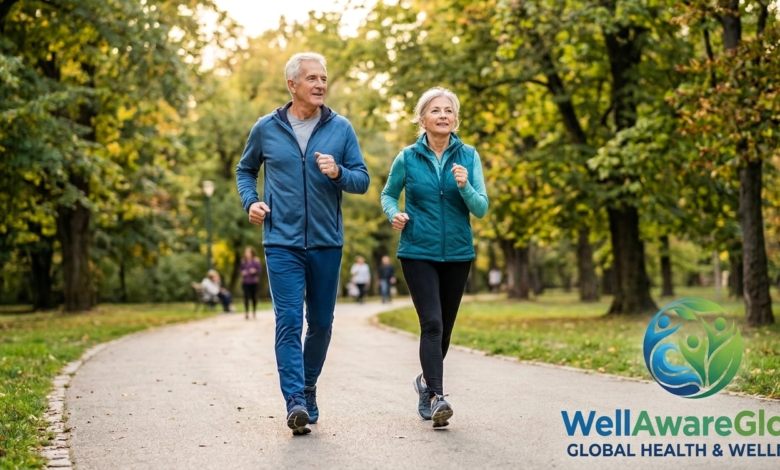
Brisk walking, where you are moving fast enough to raise your heart rate slightly but can still hold a conversation, is the target. Most adults benefit from aiming toward 7,000 steps per day as a general benchmark. Fitness trackers and smartphone apps can help you monitor this without overthinking it.
If your joints or stamina make longer walks difficult, start with two or three 10-minute walks spread across the day. Short sessions accumulate. Three 10-minute walks produce the same cardiovascular benefit as one 30-minute session.
Other Enjoyable Aerobic Options
Walking is a strong default, but variety helps with long-term consistency. Other low-impact aerobic activities well-suited to older adults include:
- Swimming and water aerobics: water supports body weight and reduces joint stress significantly
- Cycling on flat terrain or a stationary bike: builds leg strength alongside cardiovascular fitness
- Dancing: combines movement, rhythm, and social connection
- Gardening and active yard work: counts as moderate activity for most adults over 60
RECOMMENDED POST: How to Improve Cardiovascular Endurance (Proven Tips That Work)
A Simple Weekly Structure
You do not need a complicated schedule. Here is a starting framework:
- Monday and Thursday: 30-minute brisk walk
- Tuesday: Water exercise or cycling
- Saturday: Active household tasks or a longer leisure walk
- Other days: Light movement, stretching, or rest as needed
The goal is to make movement feel like a natural part of your day rather than a scheduled obligation. Pair walks with something you already enjoy, a podcast, a phone call with a friend, or a route through a neighborhood park.
Strength Training for Older Adults
Muscle loss is one of the most significant contributors to loss of independence as we age. Strength training directly counters this. The American College of Sports Medicine recommends resistance training at least two days per week for adults over 50.
You do not need a gym to do this. Bodyweight exercises, resistance bands, and basic household items can all provide sufficient resistance for meaningful strength gains.
Exercises That Require No Equipment
These movements target the major muscle groups most important for daily function:
- Chair squats: stand up from a chair and sit back down slowly. This directly trains the muscles you use for getting out of bed, rising from a toilet, and climbing stairs
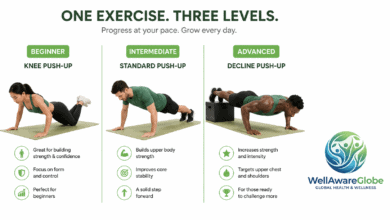
- Wall push-ups: place hands on a wall at shoulder height and perform a push-up. Builds chest, shoulder, and tricep strength
- Seated leg lifts: while seated, straighten one leg and hold for 5 seconds, then lower. Strengthens quadriceps without knee strain
- Calf raises: stand behind a chair for support and rise onto your toes slowly. Improves ankle stability and lower leg strength
RECOMMENDED POST: Simple Home Exercises to Improve Strength and Energy
A Beginner Strength Routine
Three days per week, try this 20-minute routine:
- 5 minutes: march in place to warm up
- 10 chair squats, rest 60 seconds
- 10 wall push-ups, rest 60 seconds
- 10 seated leg lifts per side, rest 60 seconds
- 10 calf raises
- 5 minutes: gentle full-body stretching to cool down
Start with one set of each exercise. Once that feels manageable after a week or two, increase to two sets. Proper form matters more than the number of repetitions. Move slowly and deliberately rather than rushing through the exercises.
Progressing Over Time
After four to six weeks of consistent training, your body adapts and the same exercises feel easier. That is the signal to add difficulty. Try holding a light water bottle during chair squats, increasing repetitions to 15, or adding a resistance band to seated rows.
Progress does not need to be dramatic to be meaningful. An older adult who goes from being unable to get out of a chair without pushing off with both hands to doing 10 controlled chair squats has made a significant functional improvement.
Balance, Flexibility, and Fall Prevention
Falls are the leading cause of injury-related death among adults 65 and older, according to the CDC. In the United States alone, one in four adults over 65 falls each year. The majority of these falls are preventable with targeted daily habits.
Daily Balance Practices
Balance improves with practice, just like strength. These exercises can be done anywhere with minimal space:
- Single-leg stand: hold a chair or counter for support, lift one foot slightly off the floor, and hold for 10 to 30 seconds. Switch sides. Practice daily and build duration over time
- Heel-to-toe walking: walk in a straight line placing the heel of one foot directly in front of the toes of the other. This challenges your balance in a controlled way
- Tai chi: a slow, flowing movement practice with strong evidence for reducing fall risk. A 2017 Cochrane review found that tai chi programs reduced falls in older adults by about 20 percent
Flexibility for Better Mobility
Stretching keeps your joints moving through their full range of motion and reduces the stiffness that builds up from sitting or sleeping. Try to spend 5 to 10 minutes stretching daily, ideally after your body has warmed up.
Useful stretches for older adults:
- Seated hamstring stretch: sit at the edge of a chair, extend one leg, and reach gently toward your foot
- Shoulder cross-body stretch: bring one arm across your chest and hold it with the opposite hand for 20 seconds
- Gentle spinal rotation: seated, place your hands on your knees and slowly rotate your upper body to the left and right
- Ankle circles: seated or standing, rotate each ankle 10 times in each direction to maintain joint mobility
If arthritis limits your range of motion, chair-based yoga and warm water exercise are excellent adaptations. The goal is gentle, consistent movement, not forced stretching.
Nutrition and Recovery for Fitness and Healthy Aging
Exercise produces its benefits during recovery. If you are not eating, hydrating, and sleeping adequately, your body cannot repair the tissue you have stressed through activity.
RECOMMENDED POST: Wellness Through Food: How What You Eat Shapes Every Part of Your Life
Protein and Muscle Maintenance
Older adults need more dietary protein than younger adults to support muscle maintenance, not less. Research published in the Journal of the Academy of Nutrition and Dietetics suggests that adults over 65 benefit from 1.0 to 1.2 grams of protein per kilogram of body weight daily. For a 70-kilogram adult, that is roughly 70 to 84 grams of protein per day.
Good protein sources for older adults include:
- Eggs: one large egg contains about 6 grams of protein and is easy to digest
- Canned fish like salmon or sardines: affordable, high in protein, and rich in omega-3 fatty acids
- Greek yogurt: 15 to 20 grams of protein per cup, plus calcium for bone health
- Legumes: lentils and chickpeas provide protein alongside fiber, which supports digestive health
Hydration and Sleep
Thirst sensation diminishes with age. Many older adults are mildly dehydrated without realizing it. Dehydration contributes to fatigue, reduced concentration, and increased injury risk during exercise. Drink water consistently throughout the day rather than waiting until you feel thirsty.
Sleep is where much of the recovery from exercise actually happens. Growth hormone, which supports muscle repair, is primarily released during deep sleep. Adults who sleep fewer than 6 hours consistently see slower recovery, increased injury risk, and reduced motivation to exercise. Aim for 7 to 9 hours in a consistent sleep environment.
Anti-Inflammatory Foods Worth Including
Chronic low-grade inflammation accelerates age-related decline. Certain foods actively reduce this inflammation:
- Berries: blueberries, strawberries, and raspberries are high in antioxidants
- Fatty fish: salmon and mackerel contain omega-3s that support joint and cardiovascular health
- Olive oil: a staple in diets associated with longevity across multiple long-term population studies
- Leafy greens: spinach, kale, and collards provide vitamins K and C alongside magnesium
Common Mistakes That Slow Progress
Most people who struggle with fitness and healthy aging are not making dramatic errors. They are making small, common mistakes that compound over time.
Starting Too Hard
Returning to exercise after a long break or starting for the first time is exciting. That enthusiasm often leads to overexertion in the first week, soreness that makes the second week miserable, and abandonment by week three. Start at 50 percent of what you think you can handle. The goal in the first month is consistency, not performance.
Ignoring Pain Signals
There is a meaningful difference between the mild muscle fatigue of a good workout and pain that signals injury. Joint pain, sharp pain during movement, or pain that persists for more than 48 hours after exercise warrants a pause and a conversation with your doctor or physiotherapist. Pushing through real pain creates injuries that set you back months.
Skipping Balance and Flexibility Work
Most adults over 50 who exercise focus on walking or light cardio and skip balance and flexibility training entirely. This is a significant gap. Falls, not cardiovascular events, are the most common cause of serious injury and hospitalization among older adults. Ten minutes of balance and stretching work daily directly reduces this risk.
Neglecting Social Connection
Motivation is not purely internal. Adults who exercise with a friend or group are significantly more likely to maintain their routine over time. If you do not have a workout partner, consider a walking group, a beginner yoga class, or a community fitness program. The social connection doubles as accountability.
Real-World Examples of Fitness and Healthy Aging
Grace, 68: From Fall Fear to Trail Walking
After a minor fall at home, Grace became afraid to move confidently. Her physical therapist started her with chair exercises and daily 10-minute walks around her neighborhood. After three months, she joined a local walking group. Six months later, her doctor noted a measurable improvement in her bone density scan results and her blood pressure dropped to normal range without medication adjustment. She now walks easy hiking trails on weekends with two friends.
Raymond, 74: Strength Training at Home
Raymond had never done structured exercise in his life. At 74, he noticed he was avoiding stairs and had trouble carrying grocery bags. His daughter printed a simple resistance band routine from a public health website. He did it three mornings a week while watching the news. After four months, he was carrying his grandchildren in the park without fatigue. The routine took 18 minutes.
Dorothy, 82: Staying Active with Arthritis
Dorothy has moderate osteoarthritis in both knees. Her rheumatologist recommended a warm water exercise class at a local community pool. Three days a week for six months, she attended. Her pain scores dropped, her range of motion improved, and she reported sleeping better than she had in years. Her case is common. Arthritis is not a reason to stop moving. It is a reason to move differently.
Frequently Asked Questions (FAQ)
Is it too late to start exercising in my 70s or 80s?
No. Multiple randomized controlled trials have demonstrated strength and balance improvements in adults well into their 80s who begin structured exercise programs. The starting point does not determine the outcome. Consistency does. Start slowly, progress gradually, and let your doctor guide you if you have complex health conditions.
What is the best exercise for fitness and healthy aging?
There is no single best exercise. Walking is the most accessible and sustainable aerobic option for most adults. Resistance training twice a week addresses muscle loss. Balance work reduces fall risk. Flexibility training maintains joint function. A complete routine includes all four elements, even if each session is short.
How do I stay motivated when progress feels slow?
Track functional improvements rather than scale numbers or workout metrics. Can you climb stairs more easily than you could two months ago? Do you sleep better? Does your back feel less stiff in the morning? These are the meaningful outcomes of fitness and healthy aging. Celebrate them. Progress in older adults is real but often less visible than in younger exercisers. The internal improvements in circulation, bone density, and muscle composition happen before you can see them in a mirror.
What if I have joint pain or a chronic health condition?
Low-impact options like swimming, water aerobics, recumbent cycling, and chair-based exercises allow you to stay active without stressing painful joints. Your doctor or a physical therapist can help you identify specific exercises appropriate for your condition. Being sedentary because of joint pain tends to worsen the pain over time. Movement, done correctly, is usually part of the solution.
How much exercise per week is actually necessary?
The CDC recommends 150 minutes of moderate aerobic activity per week plus muscle-strengthening activities on two or more days. That is a guideline, not a minimum threshold for benefit. Any amount of movement is better than none. If you can only do 20 minutes three times a week right now, start there and build from it.
Can diet really make a difference in how I age physically?
Yes, meaningfully so. Protein intake directly supports muscle maintenance. Omega-3 fatty acids reduce joint inflammation. Calcium and vitamin D protect bone density. Chronic dehydration accelerates fatigue and impairs recovery. Diet is not a replacement for exercise, but it multiplies the benefit of every workout you do.
Conclusion
Fitness and healthy aging are built one habit at a time. Walking daily, doing two sessions of light strength training each week, spending 10 minutes on balance and stretching, eating enough protein, staying hydrated, and sleeping consistently. None of these are extreme. All of them work.
The most common mistake is waiting for the perfect moment or the ideal program before starting. There is no ideal program. There is only the habit you build this week and the one you add next month.
Pick one thing from this article. Not five things. One. Commit to it for two weeks. If it sticks, add a second habit. This is how sustainable change actually happens for most people.
Your goal is not to perform athletically. Your goal is to stay capable, independent, and engaged with the life you want to live. Fitness and healthy aging give you the best available shot at doing exactly that.
Trusted Resources for Further Reading
- National Institute on Aging: nia.nih.gov
- Centers for Disease Control and Prevention: cdc.gov/aging
- World Health Organization Physical Activity Guidelines: who.int
- American College of Sports Medicine: acsm.org
Medical Disclaimer
This article is for educational and informational purposes only. It does not replace professional medical advice, diagnosis, or treatment. Always consult a qualified healthcare provider before starting a new exercise or wellness routine, especially if you have existing health conditions, injuries, or mobility limitations. Individual results vary.