10 Fibroids Wellness Tips: Natural Lifestyle and Diet Support for Women’s Health

10 Fibroids Wellness Tips: natural lifestyle and diet support for women’s health, with symptoms, causes, doctor guidance, and safe daily habits.
Medical Disclaimer: This article is for educational and wellness information only. It is not medical advice, diagnosis, treatment, or a substitute for care from a qualified doctor. Fibroids can cause heavy bleeding, anemia, pelvic pain, fertility concerns, or pregnancy complications in some women. Always speak with a licensed healthcare professional before using supplements, changing medication, delaying treatment, or making decisions about fibroid care.
Introduction: 10 Fibroids Wellness Tips: Natural Lifestyle and Diet Support for Women’s Health
Have you been told you have fibroids, or are you worried because your periods feel heavier, more painful, or less predictable than before? Many women feel confused after hearing the word fibroids because the internet is full of fear, miracle claims, and unclear advice.
This guide explains 10 Fibroids Wellness Tips: Natural Lifestyle and Diet Support for Women’s Health in a calm, practical, and realistic way. You will learn what fibroids are, possible causes, common symptoms, daily wellness habits, diet support, mistakes to avoid, and when to see a doctor.
The goal is not to promise a cure. The goal is to help you understand your body, support your health, ask better questions, and make safer decisions with professional medical guidance.
What Are Fibroids and Why Do They Matter?
Fibroids, also called uterine fibroids, leiomyomas, or myomas, are growths that develop in or around the uterus. They are made of muscle and connective tissue. Most fibroids are noncancerous, and many women have them without knowing.
According to Mayo Clinic, many people with uterine fibroids have no symptoms. When symptoms happen, they can depend on the size, number, and location of the fibroids. Some women may have one small fibroid, while others may have several growths that create pressure, heavy bleeding, or discomfort.
Fibroids can grow inside the wall of the uterus, toward the inner cavity, or outside the uterus. This is why two women can receive the same diagnosis but experience very different symptoms.
For one woman, fibroids may be found during a routine scan with no major complaint. For another woman, they may affect sleep, work, energy, confidence, intimacy, fertility plans, and daily comfort.
This is why fibroid wellness must be personal. A healthy lifestyle can support your body, but the right medical plan depends on your symptoms, age, fertility goals, test results, and overall health.
Why Fibroid Wellness Should Be Balanced
A balanced approach means you do not panic, and you also do not ignore symptoms. You focus on safe habits, trusted information, and regular medical guidance.
Wellness does not mean replacing your doctor with food, herbs, or online advice. Wellness means creating a stronger foundation while you work with qualified healthcare professionals.
If you are asking, ‘Can I support my body naturally while managing fibroids?’ the answer is yes. But the safer answer is yes, with realistic expectations and medical monitoring when symptoms are present.
- Track your periods and symptoms.
- Build a nutrient-rich diet.
- Support healthy movement and rest.
- Ask your doctor about treatment options when symptoms affect daily life.
Image suggestion: Add a simple educational uterus illustration showing common fibroid locations. Keep it clean, respectful, and medical, not scary.
Call to action: Save this article and use it as a discussion guide before your next gynecology appointment.
Causes, Risk Factors, and Background of Fibroids
There is no single cause of fibroids that explains every woman’s experience. Medical research suggests that hormones, genetics, age, family history, and other health factors may influence fibroid development and growth.
Hormones are important because fibroids often grow during reproductive years when estrogen and progesterone are active. They may shrink after menopause, when hormone levels naturally fall. This does not mean hormones are the only factor, but they are part of the bigger picture.
Family history may also matter. If your mother, sister, aunt, or close female relative had fibroids, your personal risk may be higher. This is not your fault, and it does not mean you did anything wrong.
Age is another common factor. Fibroids are often found in women in their 30s and 40s, although younger women can have them too. Some women discover fibroids while trying to conceive, during pregnancy scans, or during tests for heavy bleeding.
Body weight and metabolic health may also be linked with fibroids. Excess body fat can influence hormone activity and inflammation. This does not mean weight alone causes fibroids. It simply means that healthy weight support can be part of an overall wellness plan.
RECOMMENDED POST: Healthy Eating Tips for Beginners: The Complete Guide to Starting a Nutritious Diet
Common Risk Factors
- Family history of fibroids.
- Reproductive age, especially the 30s and 40s.
- Hormonal changes linked with estrogen and progesterone.
- Higher body weight or metabolic imbalance.
- Possible nutrient gaps such as low vitamin D or low intake of fruits and vegetables.
- Ethnic and genetic patterns that may increase risk in some groups.
Diet and nutrients are also being studied. Some research reviews have explored links between fibroids, vitamin D, fruit and vegetable intake, and other dietary patterns. These findings are useful, but they should not be turned into exaggerated promises.
A healthy diet may support overall wellness, but food should not be presented as a guaranteed way to remove fibroids. Any article or product claiming to melt fibroids quickly should be approached carefully.
Voice Search Answer: What Causes Fibroids in Women?
Fibroids may be influenced by hormones, genetics, age, family history, body weight, and other health factors. There is no single cause for every woman, so diagnosis and care should be personalized.
Image suggestion: Add a soft infographic showing ‘possible fibroid risk factors’ with icons for hormones, family history, age, nutrition, and medical checkups.
Call to action: Instead of blaming yourself, focus on what you can control today: symptom tracking, regular checkups, balanced food, sleep, and movement.
Common Fibroids Symptoms and Real-Life Examples
Fibroid symptoms can range from none at all to severe. Some women only discover fibroids during a routine pelvic exam or ultrasound. Others notice symptoms that affect daily life.
Heavy menstrual bleeding is one of the most common symptoms. It may look like soaking pads quickly, passing clots, needing to change protection at night, or bleeding for more days than usual.
Heavy bleeding can lead to anemia in some women. The Office on Women’s Health lists heavy bleeding that can be heavy enough to cause anemia as a symptom of fibroids. Anemia can make a woman feel weak, tired, dizzy, cold, or short of breath.
Pelvic pressure is another common complaint. It may feel like fullness, heaviness, swelling, or pressure in the lower belly. Some women describe it as feeling bloated even when they have not eaten much.
Frequent urination can happen when a fibroid presses on the bladder. Constipation or rectal pressure can also occur when fibroids press toward the bowel.
Lower back pain, pain during sex, painful periods, bleeding between periods, and fertility concerns can also occur in some cases. Not every symptom means fibroids are the cause, which is why proper medical evaluation matters.
Symptoms Checklist
- Heavy or prolonged periods.
- Painful cramps that interrupt normal activities.
- Pelvic pressure or lower belly fullness.
- Frequent urination or trouble emptying the bladder.
- Constipation or rectal pressure.
- Lower back pain or pain during sex.
- Tiredness, dizziness, or weakness linked with heavy bleeding.
- Difficulty getting pregnant or pregnancy-related concerns.
Why Tracking Symptoms Helps
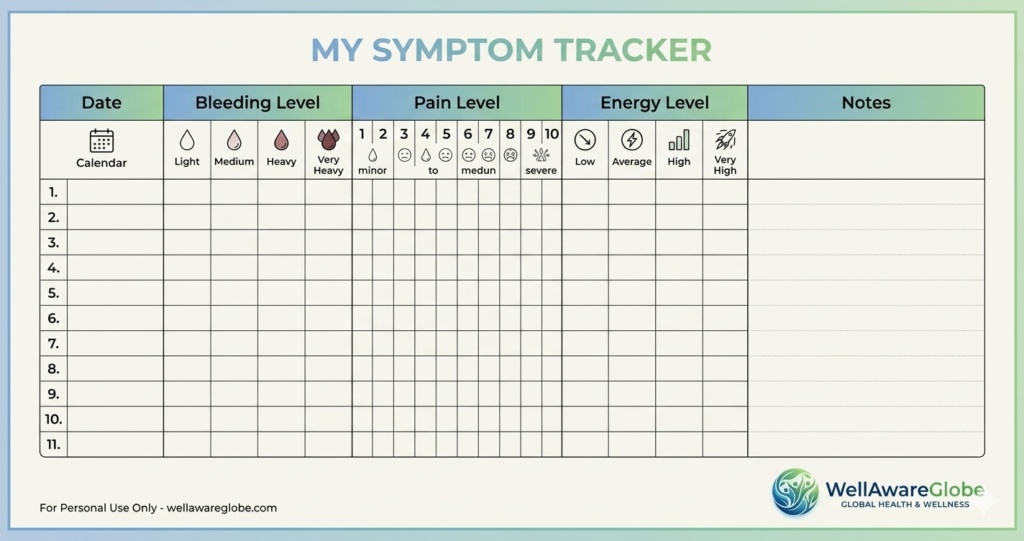
A symptom diary helps you explain your experience clearly. Many women forget details by the time they reach the clinic, especially if symptoms change from month to month.
Track the first day of your period, number of bleeding days, pain level, clots, how often you change pads, dizziness, fatigue, pressure, urination changes, and any medication used.
This information helps your doctor decide whether you need blood tests, ultrasound, medication, follow-up scans, or other treatment options.
Call to action: Start a simple period diary today. Even one month of notes can make your next appointment more useful.
10 Fibroids Wellness Tips: Natural Lifestyle and Diet Support for Women’s Health
The following wellness tips are designed to support women’s reproductive health, energy, digestion, and daily comfort. They do not claim to cure fibroids or replace medical treatment.
Think of these tips as a supportive routine. Your doctor handles diagnosis and treatment planning. Your lifestyle helps create a healthier foundation for your body.
1. Build a Colorful, Plant-Focused Plate
A colorful plate can support fiber intake, digestion, and overall health. Vegetables and fruits provide vitamins, minerals, antioxidants, and plant compounds that help your body function better.
Try to fill half your plate with vegetables or fruits most days. Include leafy greens, carrots, tomatoes, peppers, okra, cabbage, pumpkin, apples, citrus fruits, berries, pawpaw, and other whole foods you enjoy.
A plant-focused plate does not have to be expensive. Local foods can work well when prepared with less frying, less added sugar, and balanced portions.
2. Choose Fiber-Rich Carbohydrates
Fiber supports digestion and can help reduce constipation. This may be helpful for women who feel bloated or pressured in the lower abdomen.
Good options include oats, beans, lentils, brown rice, whole grain bread, vegetables, fruits, and moderate portions of healthy starches such as sweet potatoes or plantain.
If you are not used to fiber, increase it gradually and drink enough water. Sudden large increases can cause gas or bloating.
3. Reduce Highly Processed Foods
Highly processed foods are often high in added sugar, sodium, refined flour, and low-quality fats. They may not directly cause fibroids, but they can make healthy weight, energy, and blood sugar balance harder to maintain.
You do not need to remove everything overnight. Start with simple swaps. Choose water instead of sugary drinks, oats instead of sweet cereal, grilled or boiled foods more often than fried snacks, and whole meals more often than fast foods.
- Swap soda for water with lemon or cucumber.
- Swap pastries for fruit, nuts, or yogurt if tolerated.
- Swap processed meats for fish, eggs, beans, or chicken.
- Swap plain refined meals for meals with vegetables and protein.
4. Support Healthy Weight Without Crash Dieting
Healthy weight support may be useful because body fat can influence hormones and inflammation. But fibroid wellness should never become body shaming.
Crash dieting is not the answer. It can leave you weak, hungry, and low in important nutrients. A better approach is balanced meals, steady movement, sleep, and gradual habit change.
Start with a 20-minute walk most days, protein at breakfast, vegetables at lunch and dinner, fewer sugary drinks, and earlier sleep when possible.
5. Prioritize Iron-Rich Foods If You Bleed Heavily
If fibroids cause heavy bleeding, your iron levels may drop. Iron helps the body make healthy red blood cells, and low iron can affect energy, focus, breathing, and strength.
Iron-rich foods include beans, lentils, leafy greens, eggs, fish, lean meat if you eat it, fortified cereals, pumpkin seeds, and soy foods. Pair plant-based iron with vitamin C foods such as oranges, tomatoes, peppers, or lemon to support absorption.
Food may not be enough if bleeding is severe. Ask your doctor whether you need blood tests for hemoglobin, ferritin, or iron levels.
6. Check Vitamin D Status With Your Doctor
Vitamin D has been studied in relation to fibroids, although research is still developing. Some studies suggest that low vitamin D may be linked with fibroid risk, but this does not mean taking supplements will automatically treat fibroids.
If you spend most of your day indoors, have limited sunlight exposure, or suspect deficiency, ask your doctor about testing. Do not take high-dose vitamin D without guidance because too much can be harmful.
7. Move Your Body in a Gentle, Consistent Way
Movement supports circulation, mood, weight balance, sleep quality, and stress control. It does not need to be intense to be useful.
Walking, stretching, dancing, cycling, swimming, and gentle home workouts are all good options. If you have severe bleeding, anemia, dizziness, or strong pelvic pain, ask your doctor what level of exercise is safe.
8. Improve Sleep and Stress Recovery
Stress does not simply cause fibroids, but chronic stress can affect sleep, cravings, mood, energy, and how well you care for yourself. Managing stress is part of women’s health support.
Try deep breathing, gentle prayer or meditation, journaling, evening walks, stretching, and less screen time before bed. Sleep helps your body recover and gives you better strength to manage symptoms.
9. Stay Hydrated and Support Digestion
Water supports digestion, circulation, and daily energy. Hydration also works with fiber to support bowel regularity.
If you feel bloated or constipated, check your water intake, fiber intake, and movement routine. If bloating or pelvic pressure is persistent or worsening, do not assume it is only food. Get checked.
10. Learn Your Medical Options Without Fear
Natural support is helpful, but some women need medication, procedures, or surgery depending on symptoms and goals. Treatment is personal.
Mayo Clinic notes that some medicines treat symptoms such as heavy menstrual bleeding and pelvic pressure, although they may not remove fibroids completely. ACOG also explains that treatment choices vary and may include medication, procedures, or surgery depending on the woman’s needs.
Ask your doctor about the size, number, and location of your fibroids. Ask whether watchful waiting is safe, whether anemia is present, and how each option may affect fertility if pregnancy is important to you.
Image suggestion: Add a clean checklist graphic titled ‘10 Fibroid Wellness Habits to Discuss With Your Doctor.’
Call to action: Choose three habits from this list and practice them for the next 14 days. Small changes done consistently are more powerful than extreme plans that do not last.
Foods, Nutrients, and Daily Diet Support for Fibroid Wellness
Diet support for fibroids should be practical, affordable, and realistic. The goal is not to fear food. The goal is to build meals that support energy, digestion, hormone health, and nutrient status.
A supportive fibroid wellness diet usually includes whole foods, enough protein, vegetables, fruits, fiber, healthy fats, and hydration. It also reduces excess added sugar, frequent fried foods, and highly processed meals.
RECOMMENDED POST: Best Food For Natural Healing and Recovery After illness
Foods to Include More Often
- Leafy greens such as spinach, ugu, kale, and other vegetables.
- Beans, lentils, peas, and other fiber-rich legumes.
- Fruits such as oranges, apples, berries, pawpaw, and watermelon.
- Whole grains such as oats, brown rice, and whole wheat options.
- Protein sources such as fish, eggs, beans, yogurt if tolerated, chicken, tofu, or lean meats.
- Healthy fats from avocado, nuts, seeds, olive oil, or fatty fish in moderate portions.
Foods to Reduce, Not Fear
It is better to say reduce instead of ban. Many strict food rules make women anxious and cause frustration.
Consider reducing sugary drinks, frequent pastries, deep-fried snacks, processed meats, high-salt packaged foods, and large portions of refined carbohydrates without protein or vegetables.
This approach supports long-term wellness without making eating feel like punishment.
Simple One-Day Meal Example
Breakfast can be oats with fruit and seeds, or boiled eggs with vegetables and whole grain toast. Lunch can be beans with vegetables, rice with fish and salad, or vegetable soup with a moderate swallow portion.
Dinner can be grilled fish or chicken with sweet potatoes and vegetables, or a lighter bean and vegetable meal. Snacks can include fruit, yogurt if tolerated, nuts, boiled eggs, or cucumber with hummus.
Supplements and Herbs: Use Caution
Many women search online for herbal remedies after a fibroid diagnosis. Some products are harmless, but others may affect bleeding, hormones, liver function, surgery safety, or medication use.
Be careful with products that promise fast shrinking, total cleansing, or permanent removal. These claims can be misleading and may delay needed medical care.
Always tell your doctor about any supplement, tea, powder, capsule, or herbal product you are using.
Image suggestion: Add a balanced plate image with labels for fiber, protein, vegetables, hydration, and iron support.
Call to action: This week, plan three balanced meals in advance. Planning helps you avoid last-minute processed food choices.
Lifestyle Mistakes to Avoid With Fibroids
Many women make mistakes because they are scared or because they see strong claims online. Avoiding these mistakes can protect your health and help you make better decisions.
Mistake 1: Believing Every Natural Cure Claim
No food, drink, tea, or supplement should be promoted as a guaranteed cure for fibroids. Be careful with phrases like ‘melt fibroids fast’ or ‘remove fibroids naturally in seven days.’
Educational wellness content should be honest. Diet and lifestyle can support the body, but fibroids may still require monitoring or treatment.
Mistake 2: Ignoring Heavy Bleeding
Heavy bleeding can reduce quality of life and may lead to anemia. If your period affects work, school, sleep, prayer, relationships, or basic comfort, it deserves medical attention.
Mistake 3: Taking Herbs Without Medical Guidance
Herbs can have active effects in the body. Some may interact with medication, affect bleeding, or create risk before surgery.
Natural does not always mean safe for every person. Always ask before combining herbs with medical treatment.
Mistake 4: Waiting Until Symptoms Become Severe
Early evaluation gives you more information and may give you more options. Waiting too long can make symptoms harder to manage, especially if anemia develops.
Mistake 5: Comparing Your Fibroids With Another Woman’s Fibroids
Fibroid size, location, symptoms, and fertility goals are different. One woman may need only monitoring. Another may need medication or a procedure. Your care plan should be based on your own case.
Mistake 6: Not Discussing Fertility Plans
If you want children now or later, tell your doctor. Some fibroid locations and treatment options may matter for pregnancy planning.
Image suggestion: Use a ‘mistakes to avoid’ infographic with six clear icons and soft colors.
Call to action: Write down your biggest concern before your appointment. Clear questions help you get clearer answers.
When to See a Doctor for Fibroids
You should see a doctor if symptoms are persistent, painful, heavy, or affecting your normal life. Fibroids are common, but that does not mean you must suffer quietly.
Medical evaluation can help confirm whether symptoms are truly from fibroids or from another condition. This matters because heavy bleeding, pelvic pain, and bloating can have different causes.
Book a Medical Appointment If You Notice
- Periods that are very heavy or last longer than usual.
- Bleeding between periods.
- Severe cramps or pelvic pain.
- Pelvic pressure or lower belly swelling.
- Frequent urination or trouble emptying the bladder.
- Pain during sex.
- Dizziness, weakness, or tiredness linked with bleeding.
- Difficulty getting pregnant or concerns during pregnancy.
Seek Urgent Care If You Have
- Severe bleeding that soaks through pads very quickly.
- Fainting, chest pain, or shortness of breath.
- Sudden severe pelvic pain.
- Extreme weakness or signs of serious anemia.
- Pregnancy with severe pain or heavy bleeding.
Questions to Ask Your Doctor
- Where are my fibroids located?
- How large are they, and how many do I have?
- Are they likely causing my symptoms?
- Do I need blood tests for anemia or iron deficiency?
- Can I monitor them safely, or do I need treatment now?
- What are the benefits and risks of each treatment option?
- How could treatment affect fertility or pregnancy plans?
- When should I return for follow-up?
Image suggestion: Add a doctor visit checklist image that readers can save before their appointment.
Call to action: Do not wait for symptoms to become unbearable. If your period or pelvic symptoms are changing your life, book a checkup.
Real-World Wellness Example: A Practical Fibroid Support Journey
Imagine Ada, a 36-year-old office worker who noticed her periods were becoming heavier. At first, she blamed stress and kept pushing through. Then she started feeling tired, dizzy, and uncomfortable during workdays.
She searched online and found many scary claims. Some posts promised instant natural removal. Others made her afraid of surgery. Instead of making a rushed decision, Ada booked a gynecology appointment.
Her doctor recommended an ultrasound and blood tests. The results showed fibroids and low iron. Ada discussed her symptoms, fertility plans, and treatment options with her doctor.
At home, she began a simple wellness routine. She tracked her period, added iron-rich foods, reduced sugary drinks, started walking four times a week, improved sleep, and stopped using random herbal mixtures without guidance.
Her lifestyle did not magically remove the fibroids. But it helped her feel more organized, improved her energy habits, and made her medical conversations clearer. She stopped feeling helpless because she had a plan.
This is the real purpose of fibroid wellness. It is not about fear. It is about information, daily support, and safe decisions.
Helpful and Trusted Resources
For health articles, trust matters. Linking to credible sources can help readers learn more and can also strengthen the usefulness of your blog post.
Useful external resources include:
Mayo Clinic: Uterine fibroids symptoms and causes
Office on Women’s Health: Uterine fibroids
ACOG: Uterine fibroids patient FAQ
Mayo Clinic: Uterine fibroids diagnosis and treatment
NIH/PMC review: Uterine fibroids and diet
Cleveland Clinic: Uterine fibroids overview
FAQs About Fibroids Wellness
Can diet cure fibroids naturally?
No. Diet should not be presented as a guaranteed cure for fibroids. A balanced diet may support general wellness, digestion, weight balance, energy, and nutrient status, but fibroids may still need medical monitoring or treatment.
What foods are good for women with fibroids?
Helpful foods include vegetables, fruits, beans, whole grains, lean proteins, iron-rich foods, and water-rich foods. Women with heavy bleeding should pay special attention to iron and should ask a doctor whether blood tests are needed.
When should I worry about fibroid symptoms?
Speak with a doctor if you have heavy bleeding, severe cramps, pelvic pressure, frequent urination, bleeding between periods, dizziness, weakness, fertility concerns, or symptoms that affect daily life. Seek urgent care for severe bleeding, fainting, sudden severe pain, chest pain, or shortness of breath.
7-Day Fibroid Wellness Action Plan for Readers
A long article is useful, but readers also need a simple action plan. This seven-day plan helps turn information into daily habits without pressure or confusion.
The plan is gentle because fibroid symptoms can change from week to week. If you are bleeding heavily, dizzy, pregnant, recovering from surgery, or in severe pain, speak with a healthcare professional before starting any new exercise or supplement routine.
Day 1: Start Your Symptom Diary
Write down your current symptoms, last period date, bleeding pattern, pain level, energy level, and any medicine or supplements you use. Do not try to make it perfect. The goal is to collect useful information.
Day 2: Upgrade One Meal
Choose one meal and add more vegetables, protein, and fiber. For example, add spinach to eggs, vegetables to rice, beans to lunch, or fruit to breakfast. One upgraded meal is a realistic start.
Day 3: Hydrate and Reduce Sugary Drinks
Drink water earlier in the day and reduce one sugary drink. If plain water feels boring, add lemon, cucumber, mint, or fruit slices. Hydration supports digestion and energy.
Day 4: Move Gently
Take a 15 to 30 minute walk or do light stretching at home. Movement should feel supportive, not punishing. Stop and seek advice if you feel dizzy, weak, or unusually breathless.
Day 5: Check Iron and Energy Signs
Think about fatigue, dizziness, weakness, shortness of breath, and how heavy your period has been. If these signs are present, plan to ask your doctor about blood tests for anemia and iron levels.
Day 6: Review Your Sleep Routine
Choose one sleep improvement. Put your phone away earlier, reduce late caffeine, avoid very heavy meals at night, or practice five minutes of breathing before bed.
Day 7: Prepare for a Medical Conversation
Write down your top three questions for your doctor. Examples include: How big are my fibroids? Do I need treatment now? Could my bleeding cause anemia? What are my options if I want children later?
Call to action: Pick one day from this plan and begin today. You do not need a perfect routine to make progress.
Conclusion
Fibroids can feel overwhelming, especially when symptoms affect your period, energy, comfort, or fertility plans. But the best response is not panic, shame, or miracle promises. The best response is education, symptom awareness, practical lifestyle support, and professional medical guidance.
These 10 Fibroids Wellness Tips: Natural Lifestyle and Diet Support for Women’s Health can help you build a safer daily routine. Focus on whole foods, iron support, hydration, movement, sleep, stress recovery, symptom tracking, and regular checkups.
Most importantly, listen to your body. If symptoms are affecting your daily life, do not suffer in silence. Speak with a qualified healthcare professional, ask clear questions, and choose a care plan that supports your health and future goals.
Final call to action: Start today with one small step. Track your next period, add one vegetable-rich meal, drink more water, or book a doctor’s appointment. Small actions can make you feel more informed, prepared, and supported.