Start your daily fitness routine for weight loss at home for beginners with this proven step-by-step guide. Burn fat, build strength, and see real results in 30 days.
Are you tired of expensive gym memberships, complicated workout programs, and fitness advice that feels like it was written for professional athletes? You are not alone.
RECOMMENDED POST: Yoga for Beginners Morning Routine
Millions of beginners start their weight loss journey every year only to quit within the first few weeks because the plan they followed was too intense, too confusing, or simply not built for real life.
This guide is different. It is built specifically around a practical daily fitness routine for weight loss at home for beginners, designed around your schedule, your fitness level, and your goals. By the time you finish reading, you will have a clear, realistic plan that you can start today, without any expensive equipment or prior experience.
Why Starting a Home Fitness Routine Is the Smartest Move You Can Make
Here is something the fitness industry does not want you to know: the gym is optional.
Research consistently shows that home-based workouts can be just as effective as gym sessions for weight loss, especially for beginners. A study published in the Journal of Medical Internet Research found that people who worked out at home were more consistent with their routines compared to those who relied on gym visits. Consistency, not intensity, is what drives long-term fat loss.
When you build a beginner home workout plan for weight loss inside your own home, you remove every barrier that normally derails progress. No commute. No intimidating equipment. No waiting for machines. No comparing yourself to advanced athletes. You just show up, do the work, and build momentum.

The Psychology Behind Home Workouts
Think about the last time you skipped the gym. Was it because you were too tired to drive? Too busy to get ready? Too self-conscious to walk in?
All of those obstacles disappear when your workout happens in your living room.
For beginners especially, the mental side of fitness matters just as much as the physical side. When your routine feels accessible and non-threatening, you stick to it. And sticking to it consistently over weeks and months is exactly how weight loss happens.
The people who see the best results are not the ones with the most intense programs. They are the ones who show up most often.
Why Bodyweight Training Is Perfect for Fat Loss
You do not need dumbbells, a treadmill, or a pull-up bar to burn serious calories and reshape your body.
Bodyweight exercises like squats, lunges, push-ups, and jumping jacks recruit multiple muscle groups at once, which elevates your heart rate and burns more calories than isolated machine exercises. This style of training also improves functional fitness, which means your daily movement becomes easier and more efficient as your strength grows.
For beginners looking for easy exercises to lose weight at home, bodyweight training is the ideal starting point.
What You Actually Need Before You Begin (Less Than You Think)
One of the biggest myths in fitness is that you need a lot of stuff to get started. Let us clear that up right now.
Essential Gear (All Optional, But Helpful)
A yoga mat or soft carpet for floor exercises
Comfortable, supportive athletic shoes
A water bottle you actually like drinking from
A timer on your phone (any free app works)
Comfortable, breathable workout clothes
That is genuinely everything. No resistance bands required. No fitness tracker needed. No protein shakes necessary.
Setting Up Your Space
You only need about six feet by six feet of clear space. A bedroom corner, a section of the living room, or even a backyard patch all work perfectly. The goal is to have a consistent spot that your brain starts to associate with working out. Over time, simply walking into that space will signal to your body that it is time to move.
Tracking Your Starting Point
Before you begin your weight loss workout routine without equipment, take a few baseline measurements:
Your current weight (optional, but useful for tracking)
How many push-ups you can do in one set
How long you can hold a plank
Your resting heart rate first thing in the morning
A simple photo for personal reference
These numbers are not for judgment. They are simply a starting point so you can see how far you have come after 30 days. Progress is one of the most powerful motivators in fitness, and you cannot measure it without a starting line.
The Daily Fitness Routine for Weight Loss at Home for Beginners (Week by Week)
This is the heart of this guide. The plan below is structured progressively, which means it gets slightly more challenging each week as your body adapts. Each session is between 20 and 35 minutes long, making it realistic for people with busy lives.
Week 1: Building the Foundation (3 Days On, 1 Day Rest)
The first week is about learning the movements, building the habit, and letting your body adjust. Do not push for maximum effort. Focus entirely on form and consistency.
Daily Warm-Up (5 minutes, every session):
March in place: 60 seconds
Arm circles (forward and back): 30 seconds each direction
Hip circles: 30 seconds each side
Leg swings: 10 per leg
Slow bodyweight squats: 10 reps
Main Workout (15-20 minutes):
Perform each exercise for 30 seconds, rest for 30 seconds, and complete 2 rounds total.
Bodyweight squats
Wall push-ups (hands on the wall, easier than floor push-ups)
Standing alternating lunges
Glute bridges (lying on your back, pushing hips up)
Low-impact jumping jacks (step side to side instead of jumping)
Dead bug (lying on your back, extending opposite arm and leg)
Cool-Down (5 minutes):
Child’s pose: 60 seconds
Seated hamstring stretch: 30 seconds per leg
Chest opener stretch: 60 seconds
Deep breathing: 10 slow breaths
By the end of week one, you should feel comfortable with all six movements and have successfully completed at least three workouts. That alone puts you ahead of most people who try and quit.
Week 2: Adding Intensity (4 Days On, 1 Day Rest)
Now that you have the form down, it is time to gently increase the challenge. This is where your body starts to change.
Main Workout (20-25 minutes):
Perform each exercise for 40 seconds, rest for 20 seconds, complete 2-3 rounds.
Bodyweight squats (add a small pause at the bottom)
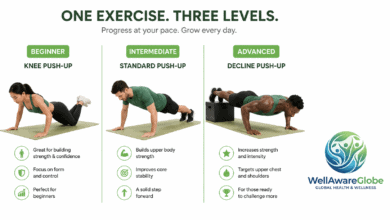
Knee push-ups (moving from the wall to the floor)
Reverse lunges
Glute bridges with a 2-second hold at the top
Jumping jacks (full version if your joints feel ready)
Plank hold (knees down if needed)
Increase the rest between rounds to 90 seconds if you need it. Listen to your body.
Week 3: Building Endurance (4-5 Days On, 1-2 Days Rest)
This week introduces circuit-style training, which is highly effective for home cardio workouts for beginners because it keeps the heart rate elevated throughout the session.
Main Workout (25-30 minutes):
Perform all exercises back to back with no rest between them. Rest for 90 seconds after completing the full circuit. Complete 3 rounds.
Squat jumps (or regular squats if joints are sensitive)
Full push-ups (or knee push-ups)
Alternating forward lunges
Mountain climbers (slow and controlled)
High knees (low impact: march with high knees)
Plank shoulder taps
Glute bridges with single leg extension
Week 4: Peak Week (5 Days On, 2 Days Rest)
By week four, your body has adapted significantly. Your endurance is better. Your form is sharper. Your confidence is higher. This week is about proving to yourself what you are capable of.
Main Workout (30-35 minutes):
Tabata-style: 20 seconds on, 10 seconds off, 8 rounds per exercise pair.
Pair 1: Squat jumps and push-ups
Pair 2: Alternating lunges and mountain climbers
Pair 3: Burpees (beginner version: step back instead of jumping) and plank hold
Rest 2 minutes between pairs. Complete all three pairs for one full session.
This structure maximizes calorie burn in a short window, making it one of the most efficient simple daily exercise routines for fat loss that beginners can realistically follow.
Nutrition Tips That Work Alongside Your Home Workout Plan
Exercise alone rarely produces the weight loss results people want. What you eat plays an equally important role, and you do not need to follow a restrictive diet to see progress.
Focus on These Foundational Habits First
Eat enough protein at every meal. Protein keeps you fuller longer, helps your body preserve muscle while losing fat, and requires more energy to digest than carbs or fat. Good sources include eggs, chicken, Greek yogurt, lentils, cottage cheese, and canned fish. Aim for a palm-sized portion of protein at each meal.
Drink water before you are thirsty. Most people mistake mild dehydration for hunger. Start your day with a full glass of water before coffee. Keep a water bottle nearby during workouts and sip consistently throughout the day. For most beginners, aiming for 6 to 8 glasses daily is a realistic and effective target.
Do not skip meals to speed up results. Skipping meals often leads to overeating later and can slow your metabolism over time. Instead, focus on building satisfying, balanced meals that include protein, fiber, and healthy fats.
Simple Meal Ideas for Beginners
Breakfast: 2 scrambled eggs with spinach, one slice of whole grain toast, and a piece of fruit
Lunch: A large salad with chickpeas, cucumber, tomatoes, feta, and olive oil dressing
Dinner: Baked chicken breast, roasted vegetables, and brown rice or quinoa
Snack: Greek yogurt with berries, or a handful of almonds with an apple
None of these require cooking skills. None of them are expensive. All of them support your weight loss goals without making you feel deprived.
Always consult a registered dietitian or nutritionist if you have specific dietary needs or health conditions.
How to Stay Motivated When Progress Feels Slow
This section might be the most important one in the entire article. Not because motivation is a magic solution, but because every beginner hits a wall and knowing how to push through it separates the people who transform their bodies from the ones who do not.
Understand That Weight Loss Is Not Linear
Your weight will fluctuate by several pounds day to day depending on water retention, hormones, sleep, and sodium intake. This is completely normal. It does not mean your routine is not working.
Instead of weighing yourself every day, check in once a week at the same time (first thing in the morning, after using the bathroom, before eating). Look at the trend over four weeks, not the number on any single day.
Build Habit Stacks, Not Willpower
Willpower is a limited resource. Habits are automatic. Link your workout to something you already do every day.
For example: “After I make my morning coffee, I do my workout.” Or: “After I put the kids to bed, I lay out my yoga mat and train for 20 minutes.” The trigger makes the habit feel natural rather than forced.
Track Non-Scale Victories
Weight loss is one measure of progress. But so are these:
Climbing stairs without getting winded
Doing five more push-ups than you could last week
Sleeping better and waking up with more energy
Noticing that your clothes fit differently
Feeling less stressed and more confident
These wins matter. Celebrate them. They are proof that your daily fitness routine for weight loss at home is working, even when the scale is moving slowly.
Find Your Why and Write It Down
Not “I want to lose weight.” Go deeper.
“I want to have energy to play with my kids without feeling exhausted.”
“I want to feel confident in photos at my sister’s wedding.”
“I want to lower my blood pressure so I can be healthy for the next 30 years.”
Write your real reason on a sticky note and put it somewhere you see it every morning. On days when motivation is low, your why will carry you further than any workout program ever could.
Real Results: What Beginners Actually Experience in 30 Days
Every person is different, and results will vary based on your starting point, consistency, diet, sleep, and stress levels. With that said, here is what most beginners who follow a structured home fitness plan realistically experience in the first month.
The Physical Changes
In the first one to two weeks, most people notice improved energy levels and better sleep before they notice any physical changes in the mirror. This is completely normal. Your body is adapting internally before the results become visible externally.
By weeks three and four, many beginners report that clothes fit slightly differently, particularly around the midsection and hips. Endurance improves noticeably. Exercises that felt difficult in week one start to feel manageable.
On average, beginners following a consistent workout routine combined with mindful eating lose between 1 and 2 pounds per week. This is considered the healthy, sustainable rate recommended by most health organizations. More rapid weight loss in the first week is often water weight and not a reliable indicator of long-term progress.
The Mental Changes
Perhaps more striking than the physical transformation is the mental shift that happens when beginners stick with a routine for 30 days.
Many people report feeling more disciplined in other areas of life. They make better food choices not because they are following a strict diet but because they feel proud of their workout progress and do not want to undermine it. They manage stress better. They sleep more soundly.
Building a fitness habit teaches you that you can do hard things. That lesson extends far beyond exercise.
A Real-Life Example
Consider Sarah, a 34-year-old office worker and mother of two who had not exercised consistently in five years. She committed to the beginner home workout plan above for 30 days. She did not change her diet dramatically, just added more protein and drank more water.
After 30 days, she had lost 6 pounds, could complete 10 full push-ups (up from zero), and reported sleeping better than she had in years. More importantly, she said the biggest change was feeling like someone who exercises rather than someone who is trying to exercise. That identity shift is what makes the habit permanent.
Frequently Asked Questions
How long does it take to see results from a beginner home workout routine for weight loss?
Most beginners notice improved energy and sleep within the first one to two weeks. Visible physical changes typically appear between weeks three and four when combined with mindful eating. Sustainable fat loss averages 1 to 2 pounds per week. Consistency over 30 to 60 days produces the most meaningful results.
Can I really lose weight with a daily fitness routine at home without any equipment?
Absolutely. Bodyweight exercises like squats, lunges, push-ups, and burpees are highly effective for burning calories and building lean muscle. When combined with a calorie-aware diet, home workouts without equipment can produce results comparable to gym-based programs. The key is progressive overload, which means gradually increasing the difficulty of your workouts over time, which is built into the four-week plan above.
How many days per week should a complete beginner work out for weight loss?
For beginners, three to four days per week is the ideal starting point. This allows adequate recovery between sessions, which is when the body actually repairs and strengthens muscle tissue. Rest days are not wasted days. They are essential for progress. As your fitness improves over weeks three and four, you can safely increase to five days per week.
This article is intended for informational and educational purposes only. The workout plans and nutrition suggestions provided are general in nature and may not be suitable for everyone. Always consult with a qualified healthcare professional or certified personal trainer before beginning a new exercise program, particularly if you have any underlying health conditions, injuries, or medical concerns.