How to Lose Weight Without Exercise for Beginners: 7 Simple Steps That Actually Work


Discover how to lose weight without exercise for beginners with 7 science-backed steps. Simple, sustainable habits that melt fat without hitting the gym.
Introduction: You Don’t Have to Kill Yourself at the Gym
Let me ask you something. Have you ever started a weight loss journey, committed to a workout plan, stuck with it for two weeks, then burned out completely and ended up back at square one?
RECOMMENDED POST: Daily Fitness Routine for Weight Loss at Home for Beginners
You’re not alone. This is the most common cycle people go through when trying to lose weight. The truth is, for many beginners, jumping straight into intense exercise is not the most effective or sustainable first step.
Learning how to lose weight without exercise for beginners is not a shortcut or a lazy approach. It’s actually the smarter starting point. Because the science is clear: what you eat and how you live day to day has a far greater impact on your body weight than gym sessions alone.
This guide breaks down 7 simple, practical, and beginner-friendly steps to help you lose weight without exercising. These are habits backed by research, used by real people, and designed for long-term success, not quick fixes.
Disclaimer: This article is for educational purposes only and does not constitute medical advice. Always consult a qualified healthcare professional before starting any weight loss plan, especially if you have existing health conditions.
Step 1: Understand Calories In vs. Calories Out (Without Obsessing)
Why This Is the Foundation of Every Weight Loss Plan
Before anything else, you need to understand one simple truth: your body weight changes based on the energy balance between what you consume and what your body burns. When you take in more energy than your body uses, you store it as fat. When you take in less, your body starts using stored fat for fuel.
This is the core of how to lose weight without exercise for beginners. You don’t need to burn extra calories through workouts. You simply need to reduce what comes in.
Now, before you panic about obsessively counting every calorie, hear this: you don’t have to track every bite. What matters more in the beginning is awareness. Knowing roughly which foods are calorie-dense and which are not puts you in control.
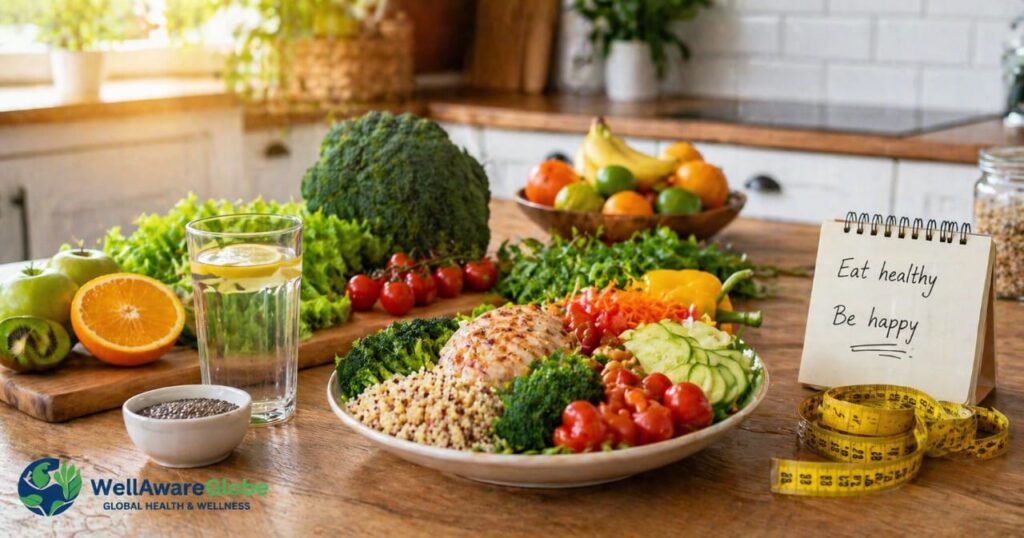
Here’s a simple starting framework:
- Focus on whole, unprocessed foods (vegetables, lean proteins, fruits, legumes)
- Reduce ultra-processed foods (chips, packaged snacks, fast food)
- Understand that a small consistent deficit adds up over weeks and months
- Aim for a reduction of around 300 to 500 calories per day from your current intake
According to the National Institutes of Health, a deficit of 500 calories per day can lead to approximately one pound of fat loss per week. That’s a sustainable, realistic pace for beginners.
You don’t need a fitness tracker or complex app. Start by simply replacing one high-calorie item in your daily routine with something lighter. One swap at a time.
Step 2: Drink More Water Than You Think You Need
How Hydration Silently Controls Your Weight
Most people are mildly dehydrated and don’t know it. And dehydration quietly sabotages weight loss in several ways.
When your body is low on water, it sometimes sends signals that feel like hunger. You eat when all you needed was a glass of water. This single habit loop causes millions of people to consume hundreds of extra calories every day without realizing it.
Drinking water, especially before meals, helps you eat less. A study published in Obesity journal found that drinking 500ml of water about 30 minutes before meals helped participants consume fewer calories and lose more weight over 12 weeks compared to those who didn’t.
Here’s how to use water as a natural weight loss tool:
- Drink a full glass of water when you wake up, before your body has processed anything
- Have a glass of water 20 to 30 minutes before every meal
- Carry a water bottle and aim for at least 8 glasses per day
- Replace sugary drinks, even fruit juice, with plain or sparkling water
The beauty of this step is that it costs nothing, requires no willpower once it becomes a habit, and starts working within days.
One practical trick: if you feel hungry within an hour of eating a full meal, drink water first and wait 10 minutes. You’ll be surprised how often the hunger disappears.
Step 3: Eat More Protein at Every Meal
The Underrated Fat-Burning Nutrient You’re Probably Not Getting Enough Of
Protein is the single most powerful dietary change you can make for weight loss without exercise.
Here’s why. Protein keeps you fuller for longer compared to carbohydrates and fat. It requires more energy to digest, meaning your body burns more calories just processing it. And it preserves muscle mass, which keeps your metabolism higher even when you’re in a calorie deficit.
RECOMMENDED POST: How to Start Eating Healthy: A Complete Beginner’s Guide to Clean Eating
A review published in The American Journal of Clinical Nutrition found that higher protein diets consistently led to greater weight loss, improved body composition, and better long-term weight maintenance.
For beginners who want to lose weight without hitting the gym, aim for protein to make up 25 to 35 percent of your daily food intake. You don’t need to calculate this exactly. Just use this simple rule: every meal should have a clear protein source.
Good beginner-friendly protein sources include:
- Eggs (cheap, versatile, filling)
- Greek yogurt (high protein, easy snack)
- Canned tuna or salmon
- Chicken breast or turkey
- Lentils and chickpeas for plant-based options
- Cottage cheese
Starting your day with a high-protein breakfast instead of sugary cereal or toast is one of the highest-return habits for natural weight loss. It reduces cravings throughout the day and stops you from overeating at lunch and dinner.
Step 4: Stop Drinking Your Calories
The Hidden Reason Your Weight Won’t Budge
This is one of the most overlooked weight loss tips for beginners. Liquid calories are invisible. They don’t make you feel full the way solid food does, but they absolutely count toward your total intake.
Think about what you drink in a typical day. A morning coffee with sugar and cream, a glass of orange juice, a soda with lunch, maybe an energy drink in the afternoon. That could easily add up to 500 to 700 calories of pure liquid, providing almost zero nutritional value and zero satiety.
Cutting out liquid calories is one of the fastest ways to create a calorie deficit without changing what you eat. Many people lose 5 to 10 pounds in the first month simply by switching to water, black coffee, and herbal tea.
Common calorie-loaded drinks to eliminate or dramatically reduce:
- Sodas and colas (regular and diet sodas both cause cravings differently)
- Fruit juices (even 100% natural ones are high in sugar)
- Sports drinks and energy drinks
- Flavored coffee drinks from coffee shops
- Alcohol, which is calorie-dense and also lowers your inhibitions around food
If you love your morning coffee, keep it. Just take it black or with a small splash of unsweetened milk. You’ll adjust to the taste within a week or two, and the calorie savings are significant.
Step 5: Eat Slowly and Stop Before You’re Stuffed
Why Speed Eating Is Making You Gain Weight
Your brain needs about 20 minutes to register that your stomach is full. If you eat fast, you’ll always overshoot. By the time the fullness signal arrives, you’ve already eaten 30 to 40 percent more than you needed.
Learning to eat slowly is one of the most natural and effective ways to reduce calorie intake without dieting, and it’s completely free.
A study published in the British Medical Journal found that people who ate slowly were significantly less likely to be overweight compared to fast eaters, even when other lifestyle factors were accounted for.
Here’s how to slow down your eating and start losing weight without exercise for beginners:
- Put your fork down between bites
- Chew each bite at least 20 times before swallowing
- Eat without screens. No phone, no TV, no laptop. Pay attention to your meal.
- Pause halfway through your meal for two minutes and ask yourself if you’re still genuinely hungry
- Use smaller plates to create the visual perception of a full meal
Eating without distractions, called mindful eating, is recognized by nutritionists worldwide as a powerful tool for weight management. It reconnects you with your body’s natural hunger and fullness cues, which most adults have lost touch with after years of distracted, rushed eating.
Step 6: Fix Your Sleep Before You Fix Your Plate
The Weight Loss Step Nobody Talks About Enough
If you’re sleeping less than 7 hours per night, you’re working against yourself no matter how well you eat.
Poor sleep directly increases levels of ghrelin, the hunger hormone, and decreases leptin, the satiety hormone. In plain terms: bad sleep makes you hungrier, less satisfied after eating, and more likely to crave high-calorie junk food.
Research from the University of Chicago found that sleep-deprived individuals consumed an average of 300 more calories per day than well-rested people. Over a month, that’s nearly 10,000 extra calories, the equivalent of almost three pounds of fat.
Additionally, poor sleep slows your metabolism, increases cortisol (a stress hormone that promotes fat storage around the belly), and reduces your motivation to make healthy choices.
Practical steps to improve your sleep quality starting tonight:
- Set a consistent bedtime and wake-up time, even on weekends
- Avoid screens for at least 30 to 60 minutes before bed
- Keep your bedroom cool, dark, and quiet
- Avoid large meals, caffeine, and alcohol in the 3 hours before sleep
- Try a calming pre-sleep routine: reading, light stretching, journaling
Many beginners who focus on sleep improvements alone report losing weight without making any other changes. That’s how powerful rest is for your metabolism and hormonal balance.
Step 7: Manage Stress Before It Manages Your Waistline
The Cortisol-Fat Connection You Need to Know About
Chronic stress is one of the most underestimated causes of weight gain and one of the biggest blockers of how to lose weight without exercise for beginners.
When you’re stressed, your body releases cortisol, a hormone designed to give you quick energy in dangerous situations. But when cortisol stays elevated day after day due to work pressure, financial worry, relationship conflict, or anxiety, it signals your body to store fat, particularly around the abdomen.
Stress also triggers emotional eating. People reach for comfort foods, typically high in sugar and fat, not because they’re hungry but because eating temporarily relieves emotional discomfort.
You don’t need to eliminate all stress. That’s impossible. But you can build simple daily habits to reduce its impact on your body weight:
- Practice 5 to 10 minutes of deep breathing or meditation daily (free apps like Insight Timer can help)
- Spend time in nature, even a 15-minute walk outside significantly reduces cortisol
- Journaling your worries before bed can reduce nighttime anxiety and improve sleep
- Connect with supportive people. Social connection is a proven stress reducer.
- Limit news and social media consumption if they trigger anxiety
When you manage your stress, you eat more intentionally, sleep better, and make more aligned food choices. All of these naturally support sustainable weight loss without any gym membership required.
Real-World Case Studies: 3 People Who Lost Weight Without the Gym
Case Study 1: Maria, 42, Lost 22 Pounds in 4 Months
Maria was a busy mother of three who couldn’t find time to exercise consistently. After trying and failing multiple gym programs, she shifted her focus to dietary changes alone. She started drinking a large glass of water before every meal, cut out her daily soda habit, added protein to every breakfast, and committed to sleeping at least 7.5 hours a night.
Within four months, without setting foot in a gym, Maria lost 22 pounds. She reports that the biggest change was eliminating liquid calories, which saved her around 400 to 500 calories per day effortlessly.
Case Study 2: James, 31, Lost 18 Pounds by Addressing Stress and Sleep
James was a software developer working long hours with chronic sleep deprivation averaging 5 to 6 hours per night. He wasn’t eating badly by most standards, but he couldn’t lose weight. When he started prioritizing 8 hours of sleep and added a 10-minute morning breathing practice, his late-night cravings dropped dramatically.
Over five months, he lost 18 pounds without changing his diet significantly or adding any formal exercise. His insulin sensitivity improved and his energy levels transformed.
Case Study 3: Priya, 28, Lost 15 Pounds Through Mindful Eating Alone
Priya discovered she was eating while distracted almost every meal, and she consistently overate as a result. She committed to eating all meals without any screen, sitting down at a table, and chewing slowly. She also started leaving a small amount of food on her plate at each meal, a technique to retrain her portion awareness.
In three months, she lost 15 pounds without any formal diet or exercise plan. The change was purely behavioral.
Frequently Asked Questions
Can I really lose weight without any exercise at all?
Yes. Weight loss is primarily driven by a calorie deficit, which can be created entirely through food choices and lifestyle habits. Exercise speeds up results and provides health benefits beyond weight loss, but it’s not required to lose weight. Many people successfully reach their goal weight through diet and lifestyle changes alone, particularly when they focus on sleep, stress, hydration, and protein intake.
How fast can I lose weight without exercise?
A realistic and healthy pace is 0.5 to 1 pound per week for most beginners when making consistent dietary changes. Some people lose more in the first few weeks due to water weight reduction, especially when cutting processed carbohydrates and sugars. Focus on the long-term trajectory rather than week-to-week fluctuations.
Do I need to count calories to lose weight without exercise?
Not necessarily. Many people lose significant weight by making qualitative food changes, eating more protein and vegetables, cutting liquid calories, eating more slowly, and reducing processed foods, without ever tracking a single calorie. However, if you plateau or aren’t seeing results after 4 to 6 weeks, a short period of calorie tracking can help identify where adjustments are needed.
Conclusion: Small Habits, Lasting Results
If you’ve read this far, you now know that learning how to lose weight without exercise for beginners is not about willpower or deprivation. It’s about stacking small, intelligent habits that work with your biology rather than against it.
To recap the 7 steps:
1. Understand your basic energy balance and make smarter food choices
2. Drink water consistently, especially before meals
3. Prioritize protein at every meal to stay full and preserve metabolism
4. Cut out calorie-containing drinks entirely
5. Slow down your eating and pay attention to fullness cues
6. Make sleep a non-negotiable part of your health routine
7. Actively manage daily stress to prevent hormone-driven fat storage
None of these steps require a gym. None of them require a rigid meal plan or expensive supplements. They simply require consistency and patience.
Start with just two of these steps this week. Build from there. Real, lasting change happens gradually, and every small improvement compounds into significant results over months and years.
Credible resources to explore further:
- National Institutes of Health (nih.gov) for evidence-based nutrition research
- Harvard Health Publishing (health.harvard.edu) for accessible medical guidance
- PubMed (pubmed.ncbi.nlm.nih.gov) for peer-reviewed studies on weight management
What step are you going to start with this week? Leave a comment below and share your experience. Your story might be exactly what someone else needs to hear to take their first step.
If you found this guide helpful, subscribe to our newsletter for weekly, science-backed tips on healthy weight management, beginner nutrition, and building sustainable lifestyle habits, without the hype or the gym fees.